
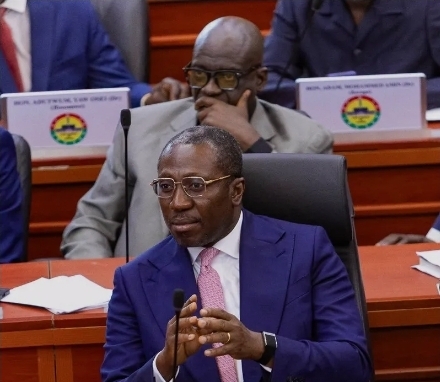
Following the presentation of the Ghana 2027 Budget Statement in Parliament by Finance Minister Dr. Cassiel Ato Forson, an intense national debate has erupted across the country over whether macroeconomic recovery is translating into tangible livelihood improvements for everyday citizens.
The 2027 fiscal policy framework centers on what the administration terms the New Economy, a multi-year strategy intended to transform Ghana’s financial landscape over the next four years.
Presenting the budget statement before Parliament, Finance Minister Dr. Cassiel Ato Forson assured the nation that the economy has crossed a pivotal threshold after enduring a severe downturn.
Highlighting the gains achieved following debt restructuring, Dr. Forson stated that confidence has returned, stability is restored, and Ghanaians can breathe again, though he noted that the country must build greater resilience into its ongoing growth.
A central pillar of this new framework is measuring economic success directly through employment metrics.As Dr. Forson explicitly declared,
We will judge growth by the jobs and income it creates,
while promising transparent support to the private sector and strict fiscal discipline to preserve stability.
Reinforcing this message, Minister of Government Communications Felix Kwakye Ofosu explained on TV3 that the initiative aims to incentivize private businesses and drive structural transformation, noting,
It is not business as usual; it creates jobs for the youth; it is a government programme intended to transform the economy over the next four years.
However, this macroeconomic optimism faces fierce opposition from the Parliamentary Minority, who argue that statistical data does not put food on the table for ordinary Ghanaian families.
Speaking at a post-budget press conference in Parliament, Minority Leader Alexander Afenyo-Markin dismissed the administration's claims, stating that the 2027 budget statement offers very little hope to citizens seeking immediate economic relief.
Addressing the government's presentation, Afenyo-Markin challenged officials to produce verifiable job creation numbers rather than theoretical concepts.
In a direct critique of the administration, Afenyo-Markin declared,
They haven’t been able to tell us how many jobs they have created. Ghanaians want jobs, jobs, jobs. We are not interested in data. We are not interested in a paper economy. We are not interested in what they call a New Economy.
The Minority Leader further accused the government of failing to fulfill campaign commitments to small traders and women, including promises regarding business loans and the 24-hour economy initiative, while questioning public spending priorities that fail to yield immediate job growth.
This ongoing exchange reflects a deep political divide in Accra between government proponents emphasizing long-term structural recovery and opposition critics demanding immediate, practical livelihoods for the public.
Also Read: Mahama Announces New Oil and Gas Discovery in Ghana’s Tano Basin
The national discourse surrounding the Ghana 2027 Budget highlights a central tension between long-term financial stabilization and urgent daily economic needs.
While the government pledges to protect fiscal recovery through private sector growth and disciplined spending, citizens and opposition leaders remain focused on whether these assurances will result in measurable employment.

Comments (0)
No comments yet. Be the first to share your thoughts.