

The constitutional review process gained momentum after the Constitutional Review Committee (CRC), chaired by Professor H. Kwasi Prempeh, submitted its final report to President John Dramani Mahama in December 2025. Among its key provisions, the committee recommended extending Ghana’s presidential term from four years to five years.
On July 30, 2026, the government formally accepted this recommendation, alongside a matching extension of Parliament’s tenure from four to five years. The government argued that a four-year electoral cycle leaves elected administrations with insufficient time to properly formulate, roll out, and evaluate long-term development policies.
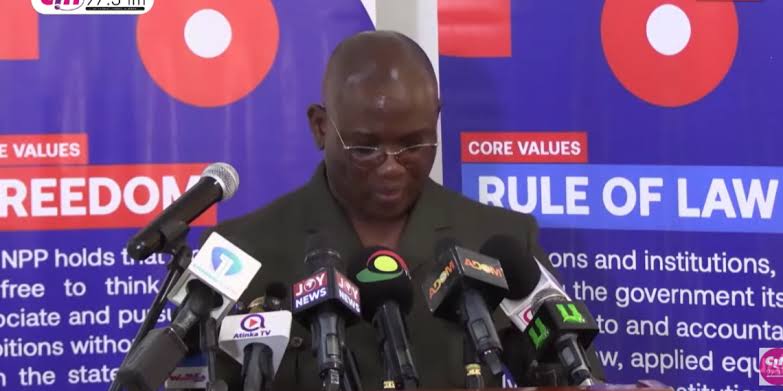
However, this proposal met firm opposition from the opposition New Patriotic Party (NPP). Speaking at a press conference in Accra on Thursday, September 17, 2026, the Member of Parliament for Gushegu, Sulemana Tampuli Alhassan, outlined the party's rejection of both the government and CRC positions. Stating the party’s official position, Tampuli Alhassan noted: “The Constitution Review Committee recommended that the Presidential term be extended from four to five years.
The Attorney-General informed Ghanaians that the government has accepted that recommendation but we have taken a different position from the position of government and the CRC. We do not support the extension and we support the retention of the existing four-year term”.
The NPP’s core argument centers on preserving regular democratic accountability for elected leaders. The party maintained that a four-year mandate gives citizens the necessary platform to periodically judge government performance and decide whether to renew or withdraw their mandate. Addressing the government's concerns regarding policy execution and transition delays, Tampuli Alhassan emphasized: “
Extending the term weakens the principle of regular accountability”.
The party argued that operational hurdles such as policy implementation, government formation, and administrative transitions should be resolved through greater operational efficiency and faster decision-making rather than prolonging constitutional terms. Additionally, the NPP pointed out that the proposed rescheduling of presidential elections from December to November already provides an incoming administration with sufficient time for an orderly transition and assumption of office without altering the four-year tenure.
While rejecting the five-year tenure extension, the NPP expressed strong support for the CRC’s proposal to lower the eligibility age for presidential candidates. The 1992 Constitution currently sets the minimum age requirement at 40 years. The CRC recommended reducing this threshold to 30 years, whereas the government proposed setting it at 35 years.
The NPP aligned itself with the CRC’s 30-year limit, arguing that the current age requirement unduly restricts young Ghanaians from aspiring to the highest office. Highlighting this position, the party stated: “We share the position of the CRC that the minimum age should be 30. The current minimum age of 40 unnecessarily restricts the ability of younger Ghanaians to aspire to the high office of the Republic”.
The NPP further cautioned that setting the age limit at 35 would still exclude a significant proportion of the nation's youth population from contesting the presidency. Ultimately, the party reiterated that any major amendments to the 1992 Constitution must be grounded in broad consensus and nationwide consultation.
The debate surrounding Ghana’s constitutional review highlights two fundamental vision models for governance: balancing policy continuity against regular citizen accountability.
While proponents argue a five-year term grants governments necessary execution time, the NPP's rejection underscores the value of maintaining four-year checks on political power while expanding leadership access to younger generations. As constitutional discussions progress, ensuring public engagement and multi-party consensus will be essential to safeguarding Ghana’s democratic legacy.


Comments (0)
No comments yet. Be the first to share your thoughts.