

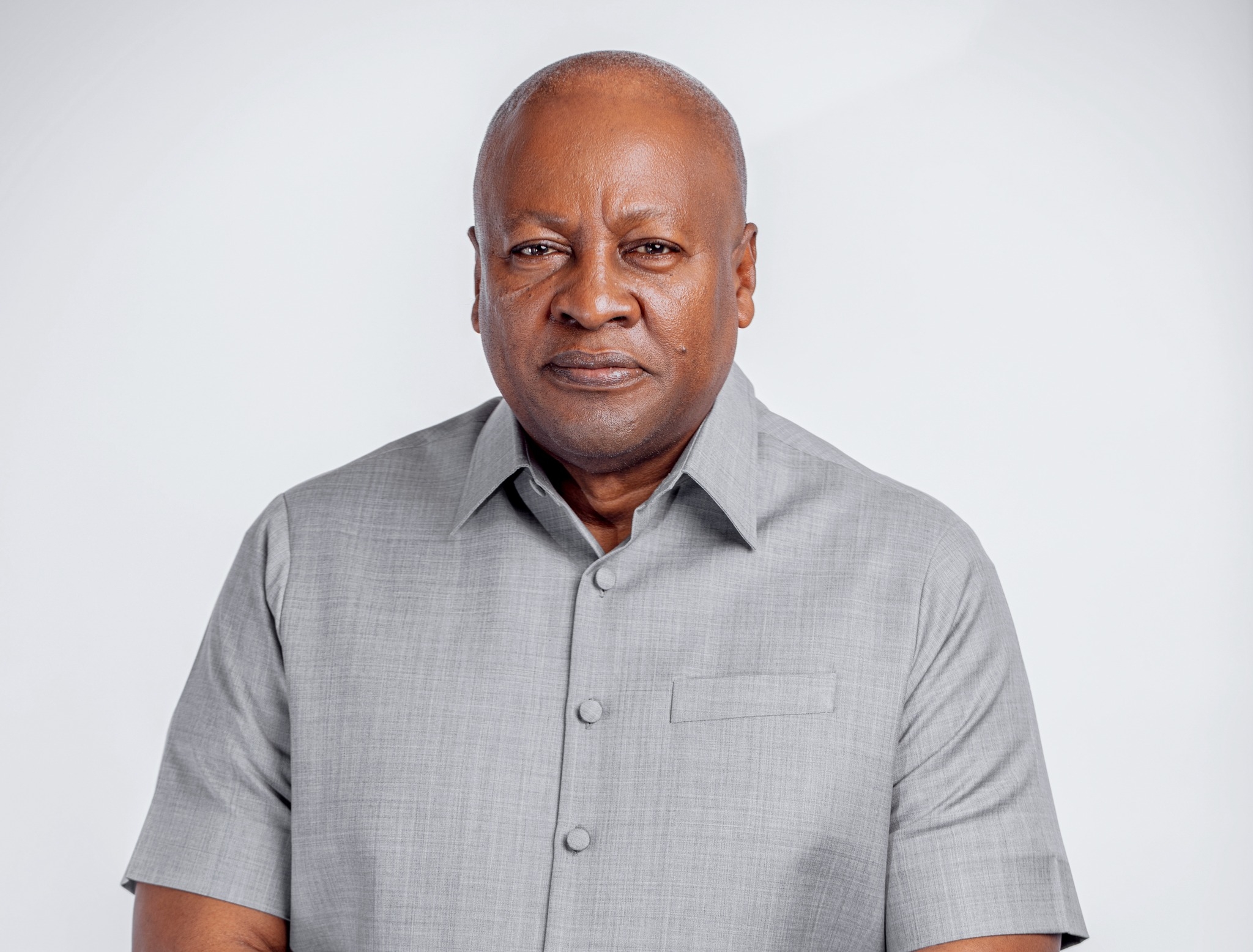
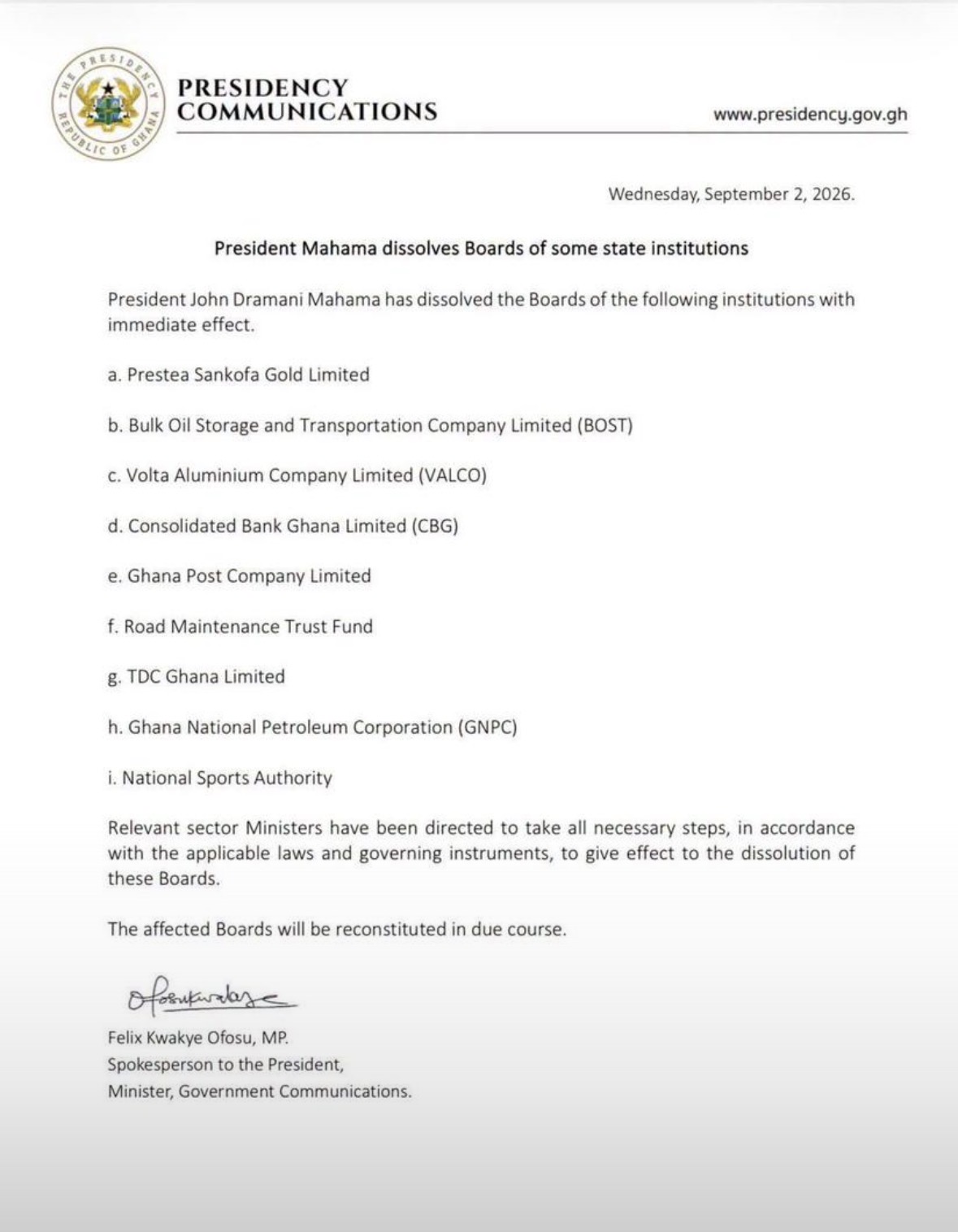
The official announcement of the dissolution was made on Wednesday, September 2, 2026, through a formal statement issued by the Spokesperson to the President and Minister for Government Communications, Felix Kwakye Ofosu.
According to the presidency, the list of affected entities comprises some of the nation's most strategically vital organizations. The institutions include Prestea Sankofa Gold Limited, the Bulk Oil Storage and Transportation Company Limited (BOST), the Volta Aluminium Company Limited (VALCO), and the Consolidated Bank Ghana Limited (CBG).
Additionally, the governing boards of the Ghana Post Company Limited, the Road Maintenance Trust Fund, TDC Ghana Limited, the Ghana National Petroleum Corporation (GNPC), and the National Sports Authority (NSA) have also been completely dissolved.
While the executive statement did not explicitly state the specific reasons behind this sudden restructuring, the timing of the directive has drawn intense public attention.
Follow the Ted News Ghana Channel on WhatsApp
Analysts point out that this major shakeup comes during a period of heightened public and institutional scrutiny regarding the commercial performance of state-run entities. This climate of accountability has been fueled by the recent release of the 2025 report on state-owned enterprises by the State Interests and Governance Authority (SIGA).
Although the national report highlighted a consolidated net profit of nearly twenty billion Ghana cedis for state enterprises after four consecutive years of losses, it also brought to light various operational anomalies and structural inefficiencies that have drawn criticism from financial watchdogs.
By clearing out the leadership blocks of these nine bodies, the presidency is widely believed to be paving the way for fresh oversight capable of driving better returns and tighter compliance.
To ensure a seamless transition of operations, the presidency has directed all relevant sector ministers to take the necessary legal and administrative steps to give effect to the dissolution, in strict accordance with the applicable laws and governing instruments of each institution.
This latest wave of changes follows an earlier transitional exercise carried out shortly after the president took office. In that initial wave, statutory boards appointed under the previous administration of former President Nana Addo Dankwa Akufo-Addo were dissolved in line with the Presidential Transition Act of 2012.
The presidency later clarified that those automatic expirations did not extend to independent constitutional bodies, requiring management teams to seek operational clearance from the Chief of Staff in the interim.
This new round of board terminations, however, is a direct, deliberate executive action aimed at resetting key institutional frameworks, with the presidency promising that the new governing boards will be reconstituted and announced in due course.
This sweeping dissolution serves as a powerful reminder of the Mahama administration's determination to reform state-owned enterprises and demand peak operational performance. By shaking up the leadership at massive giants like GNPC, BOST, and CBG, the executive branch is setting a clear standard for public-sector accountability.
As the nation awaits the announcement of the incoming board members, the focus remains firmly on whether these structural changes will bring the transparency and fiscal discipline Ghana's state institutions desperately need.
Also Read:GoldBod Saga: NPP Demands Full Transparency on Foreign Gold Buyers Amid $1.7 Billion Loss


Comments (0)
No comments yet. Be the first to share your thoughts.