

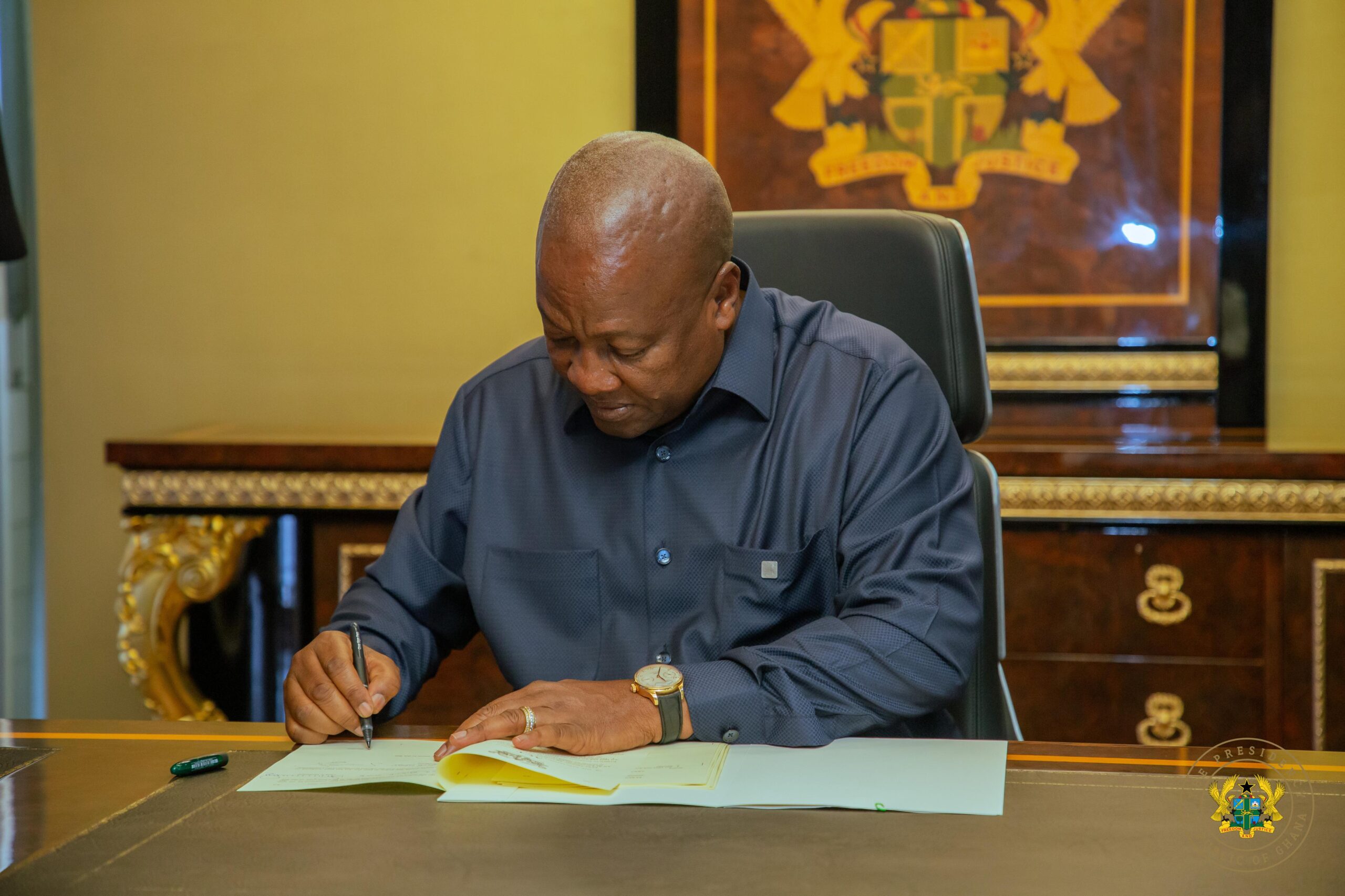
In a decisive move to overhaul public administration and stimulate the domestic economy, President John Dramani Mahama has officially signed ten major bills into law. Passed during the second meeting of the second session of the ninth parliament, these new pieces of legislation represent a comprehensive effort by the administration to modernize state institutions and strengthen revenue mobilization.
For Ghanaian citizens, business owners, and cocoa farmers alike, these legal frameworks introduce vital updates that will reshape everything from daily tax compliance to maritime security and the administration of justice.
The newly enacted laws target critical structural components of Ghana's economy and legal system, bringing necessary modernizations to longstanding administrative frameworks. Among the most anticipated reforms are the Ghana Cocoa Board Bill, 2026, and the Customs Bill, 2026.
The Cocoa Board Bill introduces a fresh and robust legislative framework designed to guide the operations of the country’s primary cocoa regulator, aiming to streamline operations and better support the agricultural sector.
Alongside this, the Customs Bill, 2026, focuses on improving the administration and enforcement of customs-related matters at our borders and ports, providing custom officers with better tools for revenue collection and trade facilitation.
The country's financial landscape will also experience notable shifts through key fiscal amendments. The President signed the Income Tax (Amendment) Bill, 2026, the Value Added Tax (Amendment) Bill, 2026, and the Excise Bill, 2026, which collectively introduce adjustments to Ghana’s tax framework.
These tax amendments, alongside the Energy Sector Levies (Amendment) Bill, 2026, aim to optimize domestic revenue mobilization, support economic stability, and ensure the energy sector's long-term sustainability. These fiscal adjustments are crucial for providing the state with the needed capital to fund public infrastructure projects and development initiatives.
Beyond financial and agricultural reforms, the package of legislation addresses significant gaps in the national defense and judicial structures. The establishment of the National Defence University Bill, 2026, officially creates the legislative foundation for the country's defense university, marking a massive leap forward for military education and strategic security training in Ghana.
Simultaneously, the maritime domain is set to benefit from the Maritime and Related Offences Bill, 2026, which provides a dedicated legal structure to define and penalize criminal offences within Ghana's maritime territory, securing our waters and boosting maritime trade safety.
Finally, the administration of justice is receiving a major boost with the introduction of the Community Service Bill, 2026, and the Tribunal Bills, 2026. Together, these laws aim to reform the judicial system by introducing community service as a viable alternative sentencing option, which will help reduce the congestion in national prisons and improve the overall delivery of justice.
By implementing these community-focused justice measures, the government is paving the way for a fairer and more humane correctional system that emphasizes rehabilitation and community development.
The signing of these ten bills into law by President John Dramani Mahama marks a monumental step forward in Ghana's ongoing legislative and institutional development. By tackling critical areas such as taxation, the justice system, agriculture, and national security, these laws establish the essential building blocks for a more resilient and efficient nation.
As these reforms are progressively rolled out, active public dialogue and civic understanding will be key to their success.
Also Read: From World Cup Hero to Courtroom: "Powder Man" Faces $30,000 Visa Fraud Charges

Comments (0)
No comments yet. Be the first to share your thoughts.