
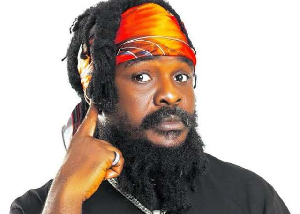
The Ghanaian music industry has been rocked by another high-profile exchange involving two of the nation's biggest stars, Sarkodie and Stonebwoy. Following Stonebwoy’s major concert at London's OVO Arena Wembley, a controversial social media post by rap icon Sarkodie sparked intense debate across the Ghanaian entertainment scene. Reggae musician Ras Kuuku has now stepped into the matter, publicly criticizing Sarkodie's actions and calling out industry stakeholders for remaining silent during the drama.
The friction between Sarkodie and Stonebwoy escalated after Sarkodie shared a social media video depicting a physically challenged man walking with crutches, posted shortly after Stonebwoy concluded his successful performance at the OVO Arena Wembley in London. Stonebwoy appeared to take the timing of the post personally, given his physical disability resulting from a childhood accident.
Highlighting their past interactions, Stonebwoy recalled previously placing a personal call to Sarkodie after his Royal Albert Hall show to congratulate him, where the two spoke for over ten minutes. This history led Stonebwoy to question Sarkodie publicly regarding why he chose to upload that specific video immediately after his Wembley show. Speaking in an interview on TV3's Late Afternoon Show with Anita, Ghanaian reggae artiste Ras Kuuku spoke directly on the matter, insisting that
"the industry should have called him to order".
Ras Kuuku argued that people within the Ghanaian music industry should not have stayed quiet, but rather confronted Sarkodie to explain that his action was wrong. Emphasizing Sarkodie's status, Ras Kuuku noted that the rapper is not an ordinary artiste, but an influential Ghanaian music brand who represents the nation on international platforms, particularly in rap music.
He expressed that engaging in petty online exchanges was unnecessary for stars of his caliber and urged top musicians to leave fan rivalries to their supporters. Ras Kuuku maintained that it is time for Ghana's biggest musical brands to avoid such behavior and focus instead on building their global reach and representing Ghana. He further questioned why relevant music groups and industry stakeholders failed to openly condemn the video.
Ras Kuuku's critique highlights a growing demand for leadership, accountability, and unity among Ghana's top musical ambassadors. By advising top-tier artistes to elevate themselves above fan rivalries, his message serves as a reminder of the responsibility that comes with representing Ghanaian music internationally.

Comments (0)
No comments yet. Be the first to share your thoughts.