

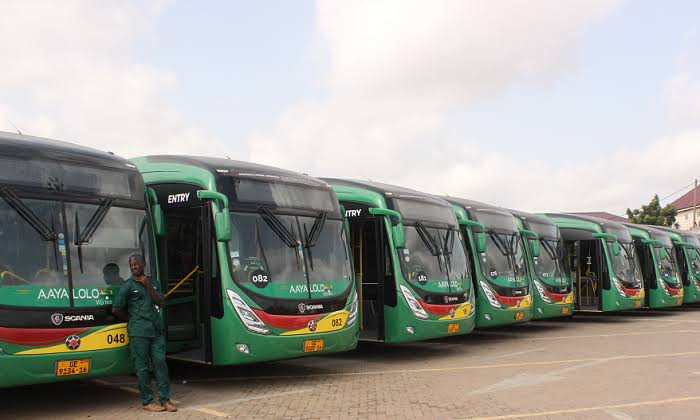
The rollout of the Aayalolo contra-flow initiative represents a major structural shift in public transportation management across the capital city.
Following an initial feasibility study launched on September 17, 2026, in close collaboration with the Motor Traffic and Transport Department (MTTD) of the Ghana Police Service, GAPTE officially introduced the service on September 29, 2026.
Currently running across three primary corridors—Accra-Adenta, Accra-Amasaman, and Accra-Kasoa—the system utilizes designated road space to bypass bottleneck congestion during morning and evening rush hours. The primary objective of this project is to enhance public mobility and ease road congestion as a social intervention, rather than focusing on profit maximization.
The operational impact on daily travel times across Greater Accra has been swift and substantial. Commuters traveling from Adenta to Accra's Central Business District (CBD), who previously endured nearly two hours stuck in traffic, now complete the trip in an average of just 28 minutes during peak morning hours.
The performance on the Amasaman corridor is equally impressive, where average commute times have plunged from over three hours to approximately 35 minutes. Meanwhile, the Accra-Kasoa route now records an average journey time of around 50 minutes, offering reliable transit for thousands of workers,students, and market traders.
The capacity data illustrates the huge volume of passengers the contra-flow system accommodates daily. Explaining the fleet metrics on the Citi Breakfast Show, GAPTE Managing Director Daouda Awudu highlighted, "One bus takes 85 people. So, if I have one that takes 85 people, 10 trips of those Aayalolo buses will give you 850. If you multiply that by 10, I'm talking about 8,500".
Overall, the contra-flow system currently moves more than 8,000 passengers daily across its active corridors. Demonstrating how this works on individual routes, Mr. Awudu noted that on the Kasoa corridor, 11 buses executing three trips each during the morning peak generate 33 total trips, creating capacity for 2,805 passenger journeys in the morning alone, with matching operations repeated in the evening. Reflecting on the social importance of these numbers, Mr. Awudu stated,
"This is mathematics and data for all of us to appreciate that it is something that would help our brothers and sisters, our mothers who are trading in Makola and other areas. It is something that I believe we must embrace to help all of us".
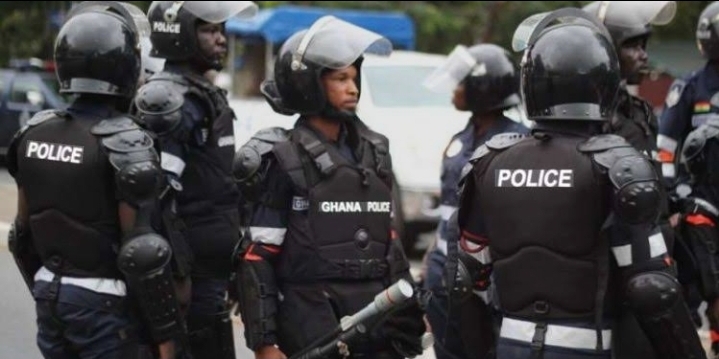
To safeguard passengers and motorists while running against standard traffic streams, Aayalolo buses operate in structured convoys led by police. motorcyclists to alert oncoming vehicles and ensure smooth corridor clearance. As public patronage continues to surge, GAPTE is actively addressing fleet pressure by repairing broken-down buses at its main depot and engaging the sector minister to acquire additional vehicles to expand the service to more corridors.
Reaffirming GAPTE's commitment to continuous operational improvement, Mr. Awudu remarked, "We are trying as much as possible to repair, and the repairs are still going on at the depot. We would be able to add to ease the pressure".Describing the core philosophy behind the project, he added,"Our profit is translated into easing congestion in Greater Accra and enhancing mobility".
The Aayalolo contra-flow system has proven to be an effective, data-backed strategy for overcoming traffic gridlock in Greater Accra, offering faster, safer, and more reliable transportation for workers, traders, and students.
As GAPTE works tirelessly to repair its fleet and expand these dedicated lanes to additional corridors, public cooperation remains vital to sustaining these transportation gains.

Comments (0)
No comments yet. Be the first to share your thoughts.