
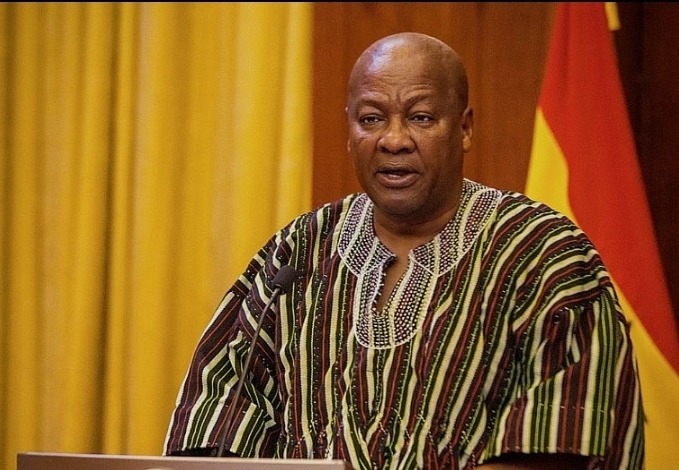
Addressing the viral surge of political commentary on TikTok, President Mahama acknowledged that regulating new digital media is not a challenge unique to Ghana, as governments worldwide struggle to preserve information integrity against algorithmic content delivery.
He reflected candidly on his own experience with public criticism, emphasizing that public leaders must develop thick skin when facing personal attacks.
Reassuring the public of his tolerance, President Mahama famously stated,
As a leader, I don't mind being insulted. I've been insulted, I was vilified, I was voted out of office. So for me, this skin is a crocodile skin. So, if you insult me, I don't mind.
While expressing personal indifference to insults, he drew a clear distinction between open criticism and cowardly cyberbullying, noting his concern over anonymous accounts hiding behind profiles to spew extreme vileness.
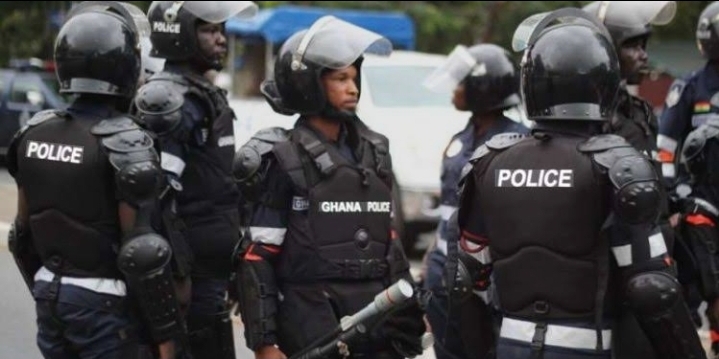
The broader debate, however, shifts from personal tolerance to the legal and operational role of law enforcement in policing speech.
President Mahama pointed out that while the government could theoretically instruct the Inspector General of Police (IGP) and Cabinet to adopt a hands-off approach and allow an unregulated "free for all," Ghanaians must collectively ask themselves if such lawlessness is truly desirable.
At the same time, he voiced genuine apprehension regarding police overreach, warning that
once you start arresting, you don't know where to stop.
Revealing his own discomfort with recent law enforcement actions, President Mahama admitted that he often learns about social media arrests through media reports rather than prior executive briefings.
He shared that many of these detentions worry him deeply, particularly when individuals are tracked and arrested for minor or unquotable insults that hardly warrant state intervention.
To navigate this delicate balance without infringing on democratic rights, President Mahama emphasized that Ghana must build consensus rather than rely solely on police discretion.
Referencing official communication from his executive secretary, he called upon key media stakeholders—specifically the Ghana Journalists Association (GJA) and the Media Foundation for West Africa (MFWA)—to convene a national workshop and stakeholder forum.
This collective dialogue aims to decide whether law enforcement should remain involved in social media conduct or if new framework guidelines should be established.
Drawing a sharp comparison with foreign jurisdictions, Mahama observed that threatening a world leader like Donald Trump on TikTok in the United States would prompt immediate security intervention, whereas similar enforcement in Ghana is frequently labeled as state oppression.
Remarking that Ghanaians sometimes act as though
we invented democracy and we are freer than even those who brought democracy,
he stressed the urgent need for a mature, balanced digital policy that safeguards both free expression and public decency.
Also Read: Ghana Bids Final Farewell to 20 Year Old Law Student Ivan Apprey Baidoo Amid Calls for Justice
President John Mahama's comments on TikTok insults and social media regulation underscore a pivotal moment for Ghana's digital democracy.
While his personal stance demonstrates resilience against political abuse, his call for an inclusive stakeholder forum highlights the necessity of a structured, community-backed framework for online speech.
Comments (0)
No comments yet. Be the first to share your thoughts.