

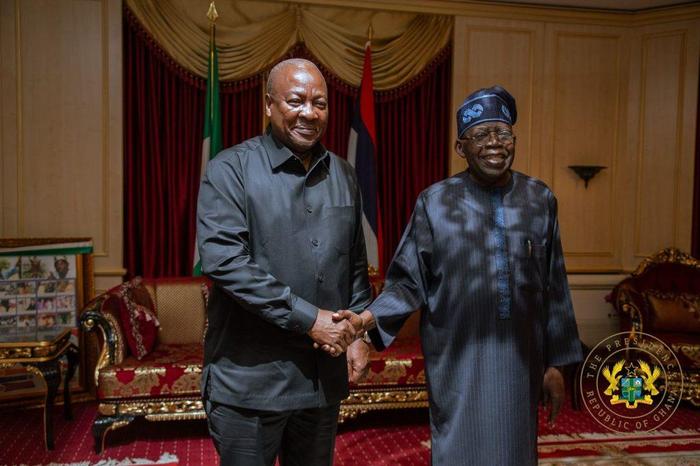
The formal petition was presented on behalf of Nigerian President Bola Tinubu by Vice President Kashim Shettima during the twenty-first Extraordinary Session of the Assembly of the African Union held in Luanda, Angola.
In a strongly worded address, the Nigerian leadership expressed deep concern over the recurring violence, warning that such attacks fundamentally undermine continental solidarity, unity, and peaceful coexistence.
While carefully recognizing South Africa’s sovereign right to enforce its domestic immigration laws and acknowledging its historical contributions to the continent, Nigeria stressed that the gravity of the attacks requires urgent and collective attention from the entire African Union.
Follow the Ted News Ghana Channel on WhatsApp
To ensure the issue receives the highest level of scrutiny, President Tinubu has officially requested that the matter of xenophobia and Afrophobia be placed on the agenda for the upcoming fortieth Ordinary Session of the AU Assembly scheduled for January 2027.
Nigeria's recent diplomatic intervention directly mirrors the trailblazing steps taken by Ghana earlier this year. On May 6, under the direction of President John Dramani Mahama, Ghanaian Foreign Affairs Minister Samuel Okudzeto Ablakwa formally petitioned the African Union to discuss the recurring attacks against African nationals at their June summit.
Ghana went a step further by proposing a comprehensive fact-finding mission to investigate the systemic root causes of xenophobic violence and recommended robust AU monitoring alongside community-level reconciliation initiatives.
This persistent pressure from West African nations has already forced South African President Cyril Ramaphosa to publicly acknowledge the crisis, previously describing the recurring violence as a source of deep shame for his country.
By taking this matter to the African Union, West African leaders are advocating for dialogue, preventive diplomacy, and home-grown continental solutions over hostile bilateral confrontation. Beyond the immediate threat of xenophobia, the diplomatic summit in Luanda also highlighted broader security concerns, with Nigeria backing the adoption of the Luanda Action Plan as a sustainable roadmap for conflict prevention.
President Tinubu cautioned that fragmented peace initiatives and a growing reliance on external military forces, private defense contractors, and foreign mercenaries risk weakening African institutions and undermining the essential principle of African ownership. Ultimately, the coordinated push by Ghana and Nigeria signals that the safety, dignity, and free movement of African citizens can no longer be compromised under the guise of national sovereignty.
The united stand by Ghana and Nigeria at the African Union marks a historic milestone in continental diplomacy, proving that the protection of human lives must always transcend individual national borders.
By demanding that xenophobia be placed at the center of the next major AU summit, these West African nations are holding South Africa accountable to the foundational ideals of Pan-Africanism.
Only through sincere dialogue, strict monitoring, and mutual respect can we build a truly unified Africa where every citizen is safe, valued, and protected.


Comments (0)
No comments yet. Be the first to share your thoughts.