

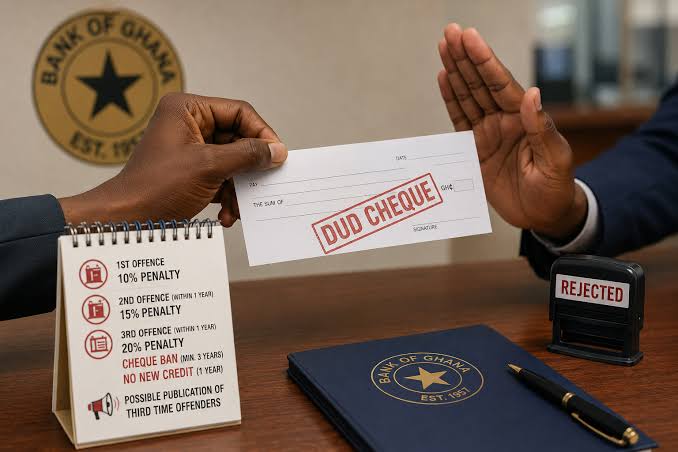
The central bank’s decision to revise these rules stems from the observation that the practice of issuing cheques without sufficient funds has persisted despite numerous previous warnings. According to the BoG, a dud cheque is formally defined as "a cheque drawn on an account by a customer for which there are insufficient funds to pay the amount specified on the cheque".
To combat this, a three-tier penalty system has been established based on the frequency of the offence. For a first-time offender, banks and Specialised Deposit-Taking Institutions (SDIs) are now required to impose a levy of 10% of the face value of the cheque. Additionally, the bank must issue a formal warning to the customer regarding the legal and financial consequences of repeating the act. This first offence is not handled in isolation; it is reported to the Credit Reference Bureaus and the Bank of Ghana, creating a permanent mark on the issuer's financial record. If a customer commits a second offence within a year of the first, the financial penalty escalates to a 15% levy of the cheque's value. Again, the institution must issue a warning and report the incident to regulatory authorities.
The most severe sanctions are reserved for those who reach a third offence, often classified as repeat offenders. These individuals face a one-year ban from accessing any new credit from any bank or SDI in Ghana. Furthermore, they are prohibited from issuing any cheques for a minimum of three years and must pay a 20% levy on the value of the dud cheque. To ensure these rules are strictly followed, the BoG requires all banks and SDIs to submit monthly returns on dud cheque activity by the 10th of every following month. This collective reporting system ensures that once a person is banned, the entire financial sector is notified, effectively locking them out of fresh credit opportunities until the ban is lifted.
In summary, the Bank of Ghana is taking a zero-tolerance approach to financial indiscipline to safeguard the country's payment systems. The combination of high financial levies and long-term credit bans serves as a stern reminder that issuing a cheque is a serious legal commitment.
To protect your financial reputation and ensure uninterrupted access to bank loans, it is vital to always verify your account balance before issuing any cheque. Are you unsure of your current credit standing? Contact your bank today to ensure your records are clear and avoid the risk of a one-year credit ban.



Comments (0)
No comments yet. Be the first to share your thoughts.