

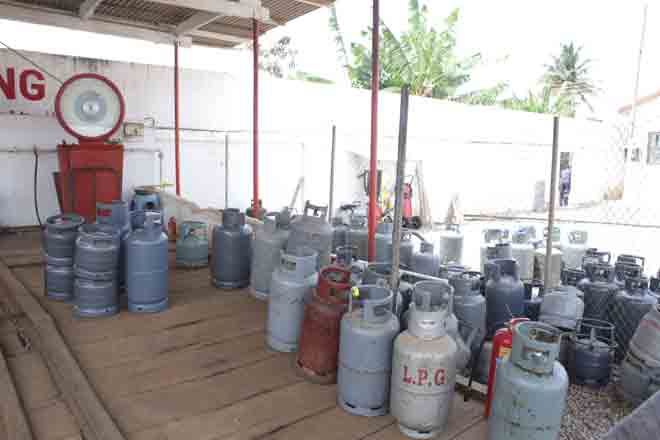
For millions of Ghanaian households and commercial food vendors, fluctuations in the price of Liquefied Petroleum Gas (LPG) directly impact daily living expenses and operational budgets. In recent times, many consumers have wondered why local cooking gas pump prices occasionally drop even when global crude and petroleum markets are trending upward. Ghana’s downstream regulator, the National Petroleum Authority (NPA), has revealed that a strategic monthly tender and procurement framework acts as an essential buffer for consumers. Understanding how this pricing model works provides critical clarity on what drives retail cooking gas prices at local refilling stations across the country.
Ghana’s downstream petroleum market operates on structured pricing windows, but the economic dynamics governing LPG differ markedly from standard road transport fuels. According to Abass Tasunti, the Director of Economic Regulation and Planning at the NPA, the key stabilizing factor is the national monthly import tender programme.
Speaking on Joy News’ PM Express Business Edition, Mr. Tasunti detailed that imported LPG consignments are procured under agreements where each cargo typically covers an entire month’s national consumption.
Because the purchase agreement fixes the cargo cost in advance, the price at which the product was imported remains locked in for that complete thirty-day window, shielding the domestic supply chain from mid-cycle international price shocks.
This locked-in mechanism explains why domestic retail prices can fall even while international benchmarks surge ahead of an upcoming pricing window. Explaining this counterintuitive relief, Mr. Tasunti noted:
“So, if you look at the next window, for example, the price of LPG is going up significantly, but we've seen LPG dropping instead of it going up, and that's because we've already locked in the price at which we imported the LPG from the previous window, which was lower than the current prices”.
By purchasing the cargo when global rates were comparatively low, the NPA and bulk distribution partners secured cheaper inventory that local Oil Marketing Companies (OMCs) and LPG Marketing Companies continue to distribute to Ghanaian households. As Mr. Tasunti emphasized, consumers have
“been shielded again, shielded again from a sharp increase for the next window because we've already locked in the price at which the product was brought in, so that helps”.
However, this commercial buffer is a double-edged sword that hinges entirely on the acquisition benchmark of each replacement cargo. When a monthly contract cycle expires, the next consignment must be purchased at the prevailing global rate.
If the new shipment is acquired during an international price spike, that higher procurement cost will be locked in for the following month, causing local pump prices to adjust upward.
Mr. Tasunti explained that this exact transition accounted for previous sharp increases in domestic LPG tariffs, where replacement supplies proved substantially more costly than the inventory that had set the prior month's price baseline.
The regulatory dynamics of LPG also stand in sharp contrast to other petroleum products like diesel, which do not always share the same monthly cargo insulation. Diesel prices face volatile geopolitical and supply-chain pressures, such as disruptions caused by the Russia-Ukraine war and targeted military attacks on major international refineries.
Mr. Tasunti observed that whenever major refining and supply hubs shut down, the total volume of diesel available on the open market shrinks dramatically, triggering severe supply-and-demand spikes that immediately transmit to retail pumps. In contrast, Ghana's LPG market continues to rely on monthly cargo hedging, meaning immediate consumer relief or upward adjustments will always reflect the locked-in import rate of the reigning shipment.
Ghana's locked-in LPG import framework serves as an effective, temporary shock absorber, decoupling local retail pumps from immediate day-to-day spikes on the international market. While this mechanism provides welcome breathing space for family budgets and commercial kitchens when global rates spike mid-month, prices ultimately catch up whenever a new, more expensive cargo docks at the ports.



Comments (0)
No comments yet. Be the first to share your thoughts.