

Reliable power generation remains central to Ghana's long-term economic transformation, industrial growth, and regional competitiveness. In a major development on the global diplomatic stage, Ghana has secured a landmark bilateral arrangement with the Russian Federation to collaborate on the construction of a 2,000-megawatt (MW) nuclear power plant.
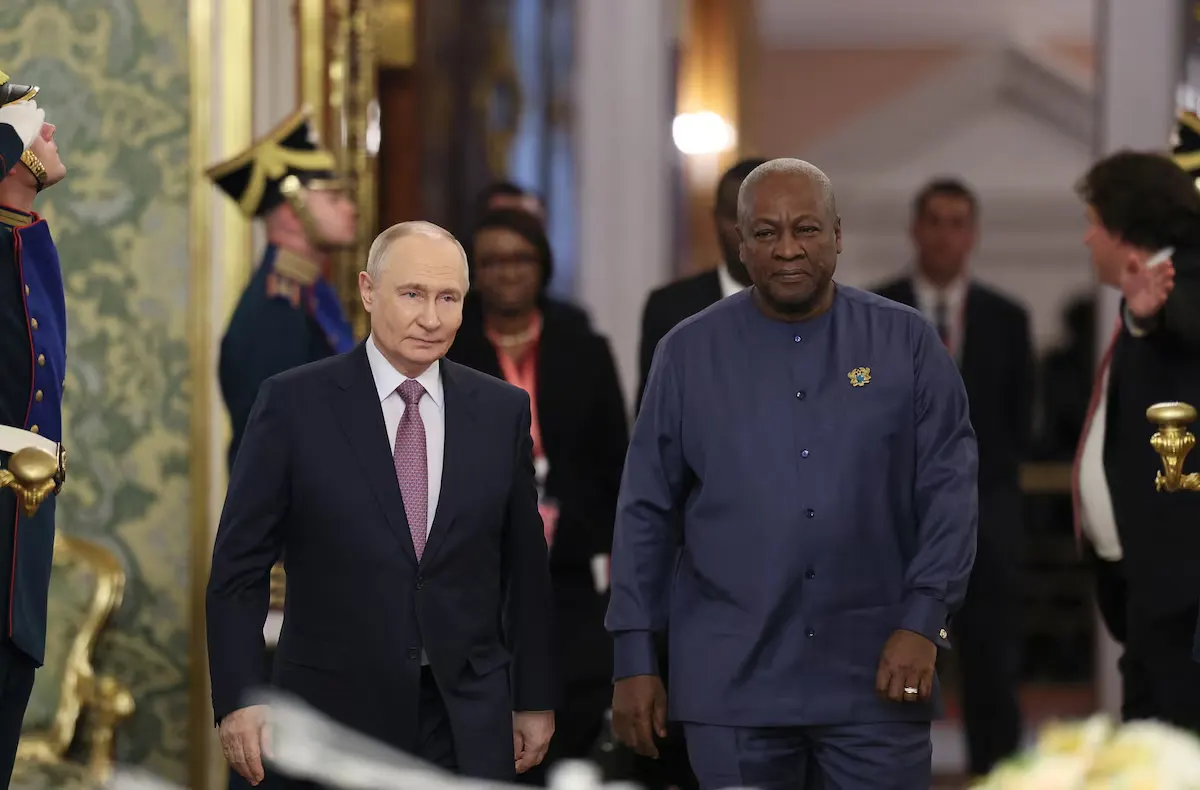
Announced following high-level discussions between Ghanaian President John Dramani Mahama and Russian President Vladimir Putin in Moscow, this prospective infrastructure venture represents a massive expansion in the nation's quest to diversify its national grid and secure stable baseload power for domestic and commercial consumers alike.
The proposed 2,000MW nuclear power station stands as the cornerstone of six major bilateral commitments struck during bilateral talks between President John Dramani Mahama and President Vladimir Putin on the sidelines of the third Russia-Africa Summit held in Moscow.
According to a formal statement released by Ghana's Foreign Minister, Samuel Okudzeto Ablakwa, the collaborative nuclear initiative is specifically envisioned to "strengthen Ghana’s energy security and industrialisation" as the country positions itself for broader industrial manufacturing and economic resilience.
While the diplomatic disclosure marks a pivotal turning point in bilateral energy cooperation, official communications did not disclose specific budget allocations, proposed installation sites, or project completion timelines.
At the international operational level, Russia's state-owned atomic energy corporation, Rosatom, corroborated this strategic focus by confirming that it is currently engaged in active consultations regarding utility-scale nuclear undertakings with four African partners, of which Ghana is a primary participant.
This development aligns with Ghana's domestic energy policy agenda, which was reinforced when Energy Minister John Jinapor inaugurated a reconstituted governing board for Nuclear Power Ghana and tasked the entity with directly integrating nuclear energy into Ghana’s power supply matrix.
The country’s atomic ambitions have been building steadily over recent years, evidenced in 2024 when Nuclear Power Ghana executed an initial framework agreement with a Chinese enterprise for reactor engineering and development.
Beyond atomic power, the Moscow summit produced several mutually agreed arrangements across defense, agriculture, education, and diplomatic governance. Both nations concluded a fresh defense pact tailored to supply logistical and military hardware to the Ghana Armed Forces. Alongside the defense agreement, Foreign Minister Ablakwa affirmed that President Putin explicitly barred Ghanaian nationals from being drawn into the ongoing conflict in Ukraine, strictly forbidding participation through either irregular recruitment channels or voluntary enlistment.
To bolster Ghana's local agricultural productivity, Russia pledged technical and material backing targeted at increasing domestic grain yields and stabilizing chemical fertilizer distribution networks. The Russian government will additionally extend further academic scholarship opportunities to Ghanaian tertiary students.
To ensure steady implementation of these accords, Ghana and Russia agreed to reactivate their Permanent Joint Commission for Cooperation, scheduling its upcoming formal working session in Moscow.
Ghana's landmark engagement with Russia to deliver a 2,000MW nuclear installation reflects an ambitious policy thrust toward solving long-term energy deficits and underpinning industrialization with clean, heavy baseload capacity.
While the broader diplomatic package delivers welcome interventions across agriculture, defense supplies, and higher education, the public and energy sector stakeholders will keenly await further clarifications regarding project feasibility, financial structures, environmental safety protocols, and designated construction sites.
Comments (0)
No comments yet. Be the first to share your thoughts.