
The newly approved rates mark a significant step upward from current wage levels, establishing a daily minimum rate of GH¢25.04 effective January 1, 2027, and GH¢28.79 effective January 1, 2028.
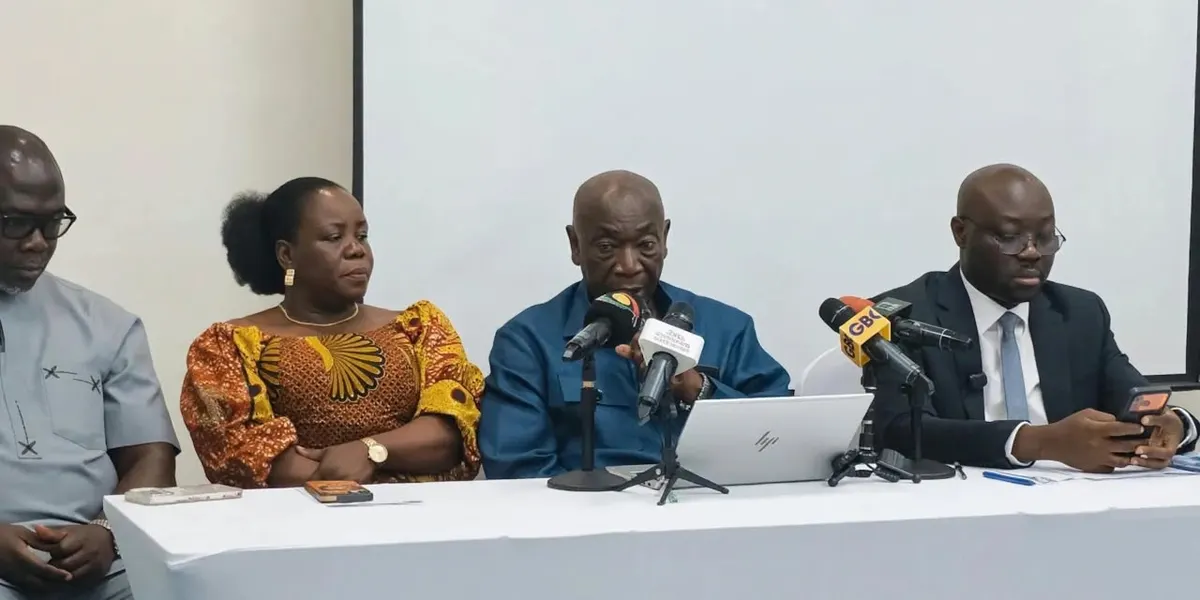
Disclosed in an official joint communiqué released in Accra on November 10, 2026, by the National Tripartite Committee—which brings together representatives from Government, Organized Labour, and the Ghana Employers' Association—the agreement reflects months of extensive consultations and constructive dialogue.
To understand the scale of this increase, one must look at the baseline established for 2026, where the daily minimum wage stands at GH¢21.77 following a 9 percent adjustment from the 2025 rate of GH¢19.97.
The 2027 rate of GH¢25.04 represents approximately a 15 percent increase over the 2026 baseline, while the 2028 figure of GH¢28.79 adds another 15 percent increase over the 2027 level.Translating these daily figures into monthly earnings highlights the real-world impact on Ghanaian households.
For a standard 27-working-day month, a worker earning the minimum wage in 2027 will see their baseline monthly income rise to approximately GH¢676, compared to roughly GH¢588 under the 2026 rate.
On a 26-working-day monthly schedule, earnings will translate to roughly GH¢651 in 2027 and rise to GH¢748 per month in 2028. Beyond the immediate cash adjustments, the strategic decision to adopt a multi-year bargaining framework represents a fundamental change in Ghana's labor relations strategy.
As noted in the tripartite agreement, this multi-year approach is explicitly designed to foster predictability in wage determination, streamline medium-term corporate and public budgeting, protect the purchasing power of Ghanaian workers, and sustain long-term industrial harmony across sectors.
However, the committee recognized that economic realities can fluctuate unpredictably over a two-year horizon. To safeguard both workers and businesses against macroeconomic volatility, the agreement incorporates a dedicated review clause.
Should there be material changes in key economic indicators—specifically inflation rates, currency exchange rates, or national economic growth metrics—the National Tripartite Committee is empowered to reconvene and reassess the agreed figures.
Any subsequent adjustments will be conducted through formal tripartite consultations, anchored in credible economic data, and finalized purely by consensus among all social partners.
To ensure widespread implementation, the committee issued an explicit directive requiring all establishments, private institutions, and commercial organizations currently paying below the new thresholds to adjust their payrolls accordingly starting January 1, 2027. Full compliance is urged across all industries. Simultaneously, the committee called on the central government to make the National Daily Minimum Wage entirely tax-exempt.
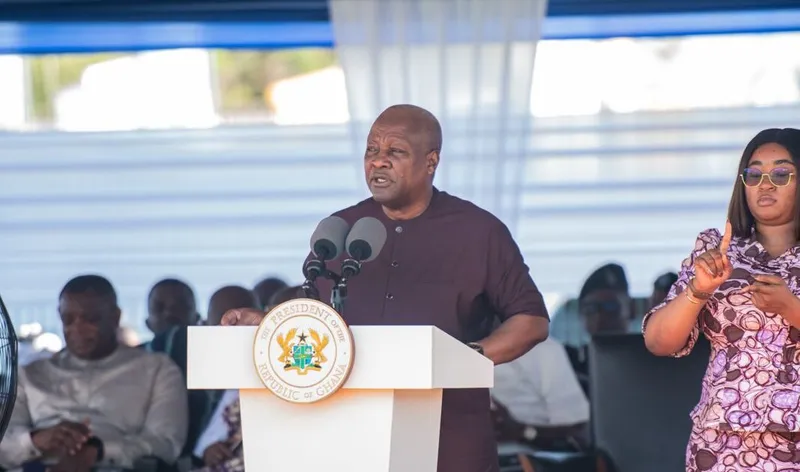
This request aligns directly with legislative developments in Ghana, following President John Dramani Mahama's assent to the Income Tax (Amendment) Act, 2026, on August 26, 2026, which legally exempts individuals earning at or below the national minimum wage from income tax obligations.
Ensuring that this tax exemption seamlessly covers the new, higher rates in 2027 and 2028 will be essential for maximizing disposable income for low-earning workers.The historic agreement carries the endorsement of high-level representatives from all three key labor sectors.
The communiqué was jointly signed by the Minister for Labour, Jobs and Employment, Hon. Emmanuel Kwadwo Agyekum; the Deputy Minister for Finance, Hon. Thomas Nyarko Ampem; the President of the Ghana Employers' Association, Nana Dr. Emmanuel Adu-Sarkodee Afriyie; and the Secretary-General of the Trades Union Congress (TUC), Mr. Joshua Ansah.
In their collective declaration, the Tripartite Committee reaffirmed the shared commitment of "government, employers and organised labour to improving workers' living standards, promoting productivity, protecting employment, sustaining business competitiveness and strengthening industrial harmony." While the multi-year deal offers welcome stability, it also unfolds amidst an ongoing broader debate led by organized labour.
The Trades Union Congress has consistently advocated for a transition from a basic minimum wage toward a comprehensive living wage framework—a model designed to account for essential daily living costs including housing, transport, healthcare, and education. As Ghana moves toward the 2027 and 2028 implementation dates, this deal marks a crucial milestone in balancing worker livelihoods with national economic resilience.
The two-year minimum wage agreement establishing GH¢25.04 for 2027 and GH¢28.79 for 2028 provides a clear, predictable path forward for Ghana's workforce and employer community alike.
By pairing steady 15 percent wage increases with tax exemption provisions and flexible economic review clauses, the National Tripartite Committee has struck a pragmatic balance between income protection and business sustainability.
As the January 1, 2027 effective date approaches, employers are encouraged to review their compensation structures early to guarantee smooth compliance.

Comments (0)
No comments yet. Be the first to share your thoughts.