

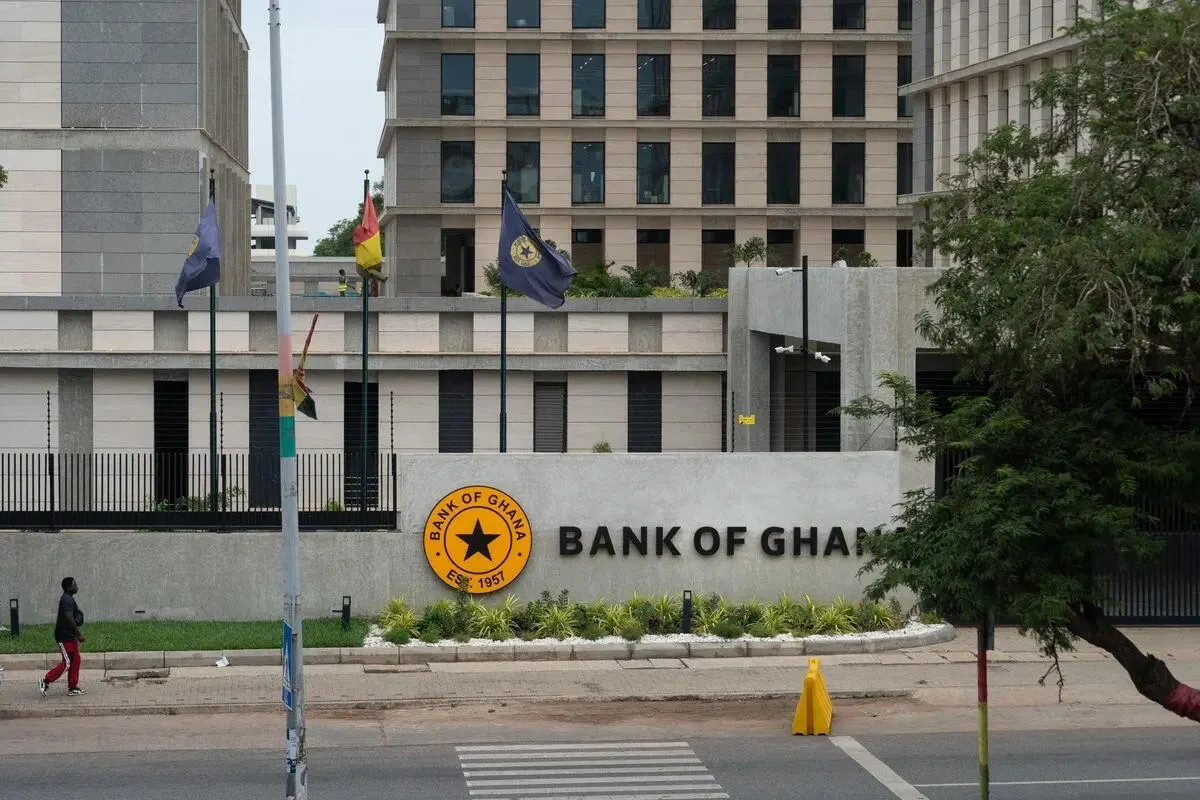
Ghana’s fiscal trajectory has reached another critical milestone as new official economic data highlights the evolving state of the nation's public debt. According to the Bank of Ghana’s latest financial update, national debt levels have seen a noticeable surge over recent months, raising important questions for policymakers, investors, and everyday citizens.
For Ghanaian readers tracking business trends, government fiscal policy, and macroeconomic stability, understanding where these numbers stand and how they are structured is essential. This article breaks down the central bank’s latest numbers, examining domestic versus external obligations, recent monthly acceleration, and what the figures mean for Ghana's economic outlook.
Ghana's total public debt stock climbed to GH¢759.3 billion by the end of October, based on the Bank of Ghana’s latest Summary of Economic and Financial Data released on Tuesday, November 17. This debt total represents 47.5 percent of gross domestic product (GDP), evaluated against an annual nominal GDP printed at GH¢1,597.5 billion.
The official release provides central bank confirmation following recent political discussions surrounding national debt figures; while President John Mahama had previously stated public debt was at 45 percent of GDP for July, former Finance Minister Mohammed Amin Adam cited 47.5 percent for October a metric now officially recorded in the Bank of Ghana’s statistical table.
A granular look at the composition of the public debt highlights a significant division between internal and foreign obligations. Domestic borrowing represents the larger portion of the total stock, standing at GH¢427.9 billion, or 26.8 percent of GDP. External debt accounts for the remaining GH¢331.4 billion, representing 20.7 percent of GDP.
Evaluated in foreign currency terms, Ghana's overall public debt equals US$65.3 billion, with external commitments accounting for US$28.5 billion. Bank of Ghana records show that the external debt stock in dollar terms has maintained relative stability throughout the year, fluctuating within a narrow window between US29.4 billion across each recorded month.
Tracing the debt movement across 2026 demonstrates a steady monthly expansion. Earlier in the year, as of February, public debt stood at GH¢674.1 billion (42.2 percent of GDP, or US$63.1 billion). Over the eight-month period between February and October, total public debt accumulated by GH¢85.2 billion.
Focusing on the third quarter, debt grew by GH¢23.5 billion in three months, rising from the GH¢735.8 billion (46.1 percent of GDP) logged at the end of July. By the end of September, the stock reached GH¢756.8 billion (47.4 percent of GDP), with October contributing an additional GH¢2.5 billion to establish the current GH¢759.3 billion benchmark.
The central bank notes that the figures compiled in the report integrate data supplied by the Ministry of Finance, the Bank of Ghana, and the Ghana Statistical Service. However, official notes within the publication caution that these metrics remain subject to potential revisions as further administrative data is reconciled. Contextualizing these figures alongside broader economic indicators such as fiscal revenue targets, inflation trends, and debt restructuring efforts is vital for assessing Ghana's broader path toward sustainable growth and financial stability.
The jump in Ghana's public debt to GH¢759.3 billion underlines the ongoing fiscal challenges and balancing act facing state financial managers. With domestic debt comprising the bulk of government obligations and external balances holding steady in dollar terms, managing borrowing costs will be central to securing long-term economic resilience. As the central bank and finance authorities continue to review and update these fiscal figures, staying informed is key to understanding the ripple effects on local commerce, interest rates, and national policy.



Comments (0)
No comments yet. Be the first to share your thoughts.