
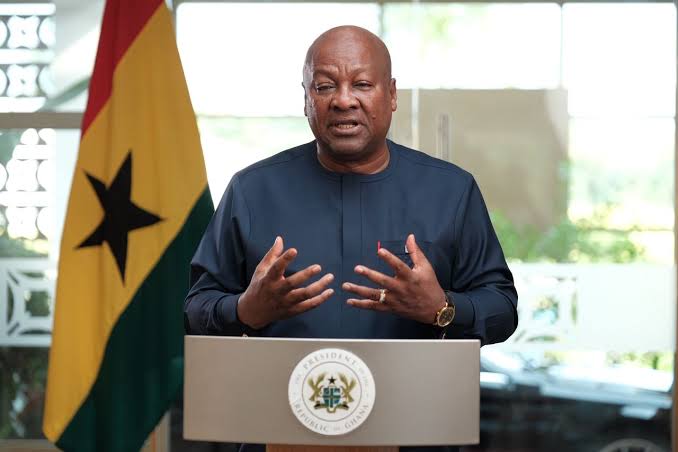
On October 16, 2026, President John Dramani Mahama commissioned four newly appointed diplomatic envoys at the Jubilee House in Accra, officially tasking them with driving economic diplomacy and promoting Ghana’s foreign policy priorities on the world stage.
The newly commissioned ambassadors—Nana Antwiwaa Dodoo to Angola, Louis Kwame Obeng to Qatar, Evelyn Korantemaa Ofosu-Amable to Israel, and Jedidiah Reuben Adogla as Ghana’s Permanent Representative to the United Nations Office in Geneva—were urged to place Ghana’s economic development at the heart of their international duties. During the ceremony, President Mahama formally articulated Ghana's push to secure a strategic partnership with the BRICS alliance of major emerging economies.
Ghana’s application to join BRICS represents a deliberate drive to diversify development partnerships and deepen South-South economic cooperation.By forging stronger institutional ties with emerging economic powerhouses, Ghana seeks to expand trade opportunities, attract capital, support local manufacturing, and accelerate industrial value addition across key productive sectors. Highlighting the core philosophy behind this decision, President Mahama stated,
“Ghana's decision to apply for partnership with the BRICS countries reflects our determination to broaden our development partnerships and deepen South-South cooperation”
Crucially, President Mahama made it clear that entering into a partnership with BRICS does not mean turning away from Western allies or traditional economic partners.
Instead, the strategy is aimed at widening Ghana’s diplomatic and commercial options amidst increasing trade restrictions, shifting geopolitical alliances, and intense global competition over critical technologies and natural resources. To ensure clarity on the international stage,the President instructed the diplomats:
“Explain this approach clearly as we seek wider opportunities for trade, investment, industrialisation, and value addition, while sustaining our long-standing relationships and working relations with our traditional partners”
A central element of this foreign policy initiative is ensuring that international agreements yield tangible, measurable benefits for the Ghanaian public. The government is pushing to shift Ghana away from simply exporting raw materials toward retaining maximum economic value within the country. This policy is supported by domestic initiatives such as the establishment of the Ghana Gold Board and ongoing structural efforts to process critical industrial minerals—including lithium, bauxite, and manganese—locally before export.
To enforce accountability in achieving these economic goals, President Mahama charged the diplomats directly:“Judge the success of your economic diplomacy by the opportunities you are able to bring to Ghana”.
Ultimately, this partnership push is designed to build relationship channels that facilitate technology transfer, skill development, research collaboration, and sustainable job creation for Ghanaians
Ghana’s decision to seek partnership with the BRICS grouping reflects a forward-looking economic approach aimed at broadening trade ties, attracting strategic investments, and accelerating local industrial growth without compromising traditional international partnerships.
By leveraging South-South cooperation, Ghana positions itself to better navigate global market complexities and extract higher value from its natural resources.

Comments (0)
No comments yet. Be the first to share your thoughts.