

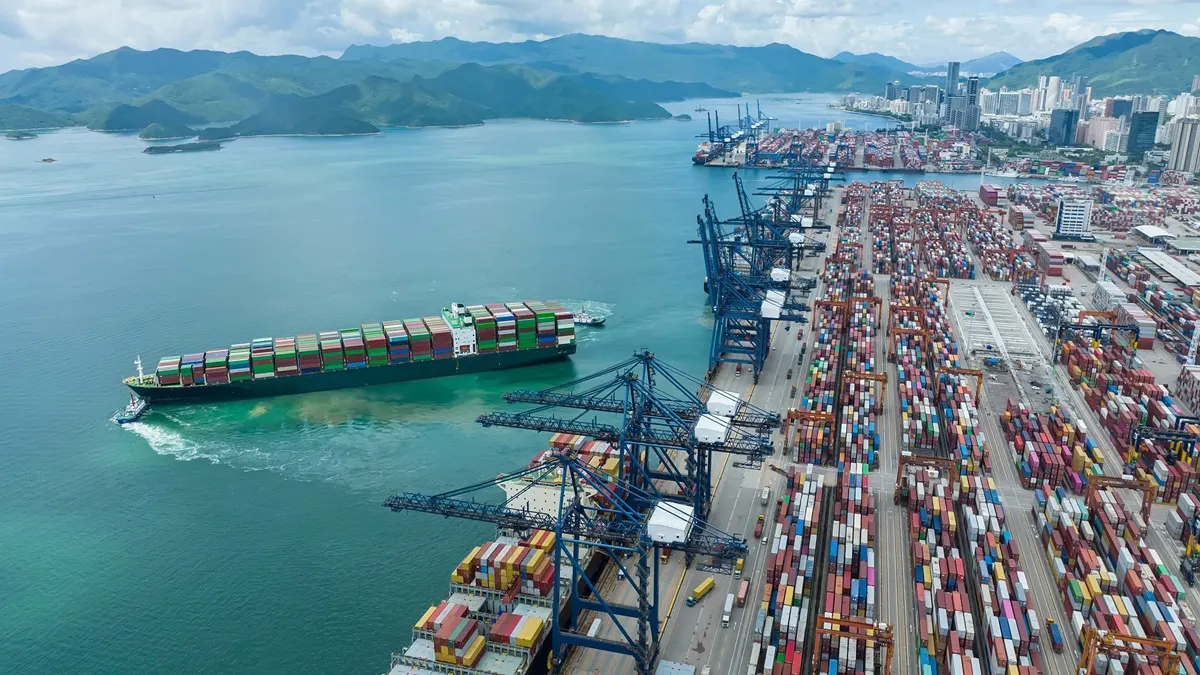
In an increasingly connected global economy, international commerce serves as the engine for business expansion, job creation, and national development across markets in Ghana and around the world. However, recent economic forecasts indicate a noticeable shift in global trade momentum that local entrepreneurs and economic observers should watch closely.
According to the International Monetary Fund (IMF) in its October 2026 World Economic Outlook (WEO), global trade volume growth is set to experience a deceleration over the next few years. Understanding these international trade shifts is essential for Ghanaian business owners, importers, and policy watchers navigating shifting supply chains and global markets.
The latest IMF projections reveal that world trade volume growth is expected to slow from 5.0 percent in 2025 down to 4.6 percent in 2026, before stabilizing slightly at 4.7 percent in 2027. Expanding on the underlying drivers behind this trend, the Fund noted that
"these dynamics reflect the drag from tariffs alongside the gradual adjustment of trade linkages and production chains through trade reconfiguration and substitution of suppliers, as well as brisk growth in technology-related trade flows".
Parallel to slowing growth, global current account balances widened in 2025 to approximately 3.8 percent of world Gross Domestic Product (GDP), reversing previous post-financial crisis declines and continuing an upward trajectory seen since the pandemic. This widening gap was largely driven by a significant increase in China’s trade surplus, which rose to about 0.6 percent of world GDP (or 3.7 percent of China’s own GDP), alongside higher surpluses across several major Asian exporting economies.
Meanwhile, the United States maintained its status as the world’s largest deficit economy, recording a current account deficit of about 1.0 percent of global GDP. Addressing these structural gaps, the Fund stated that
"global imbalances are projected to decline only modestly over the medium term,"
pointing out that persistent saving-investment distortions within key economies continue to shape external trade balances. In fact, sustained fiscal deficits in the US combined with slow rebalancing toward domestic consumption in China jointly account for about 40 percent of total global current account balances.
Although tech-driven investments and productivity gains continue to attract capital to major markets, domestic demand and trade frictions mean that wide trade imbalances and evolving tariff barriers will remain defining features of the global economic landscape for the foreseeable future.
As global trade growth cools down and trade imbalances persist between the world's largest economies, businesses must remain agile and proactive. For Ghanaian merchants and industry players, monitoring supplier shifts and understanding international tariff adjustments will be critical for managing import costs and securing supply chains.

Comments (0)
No comments yet. Be the first to share your thoughts.